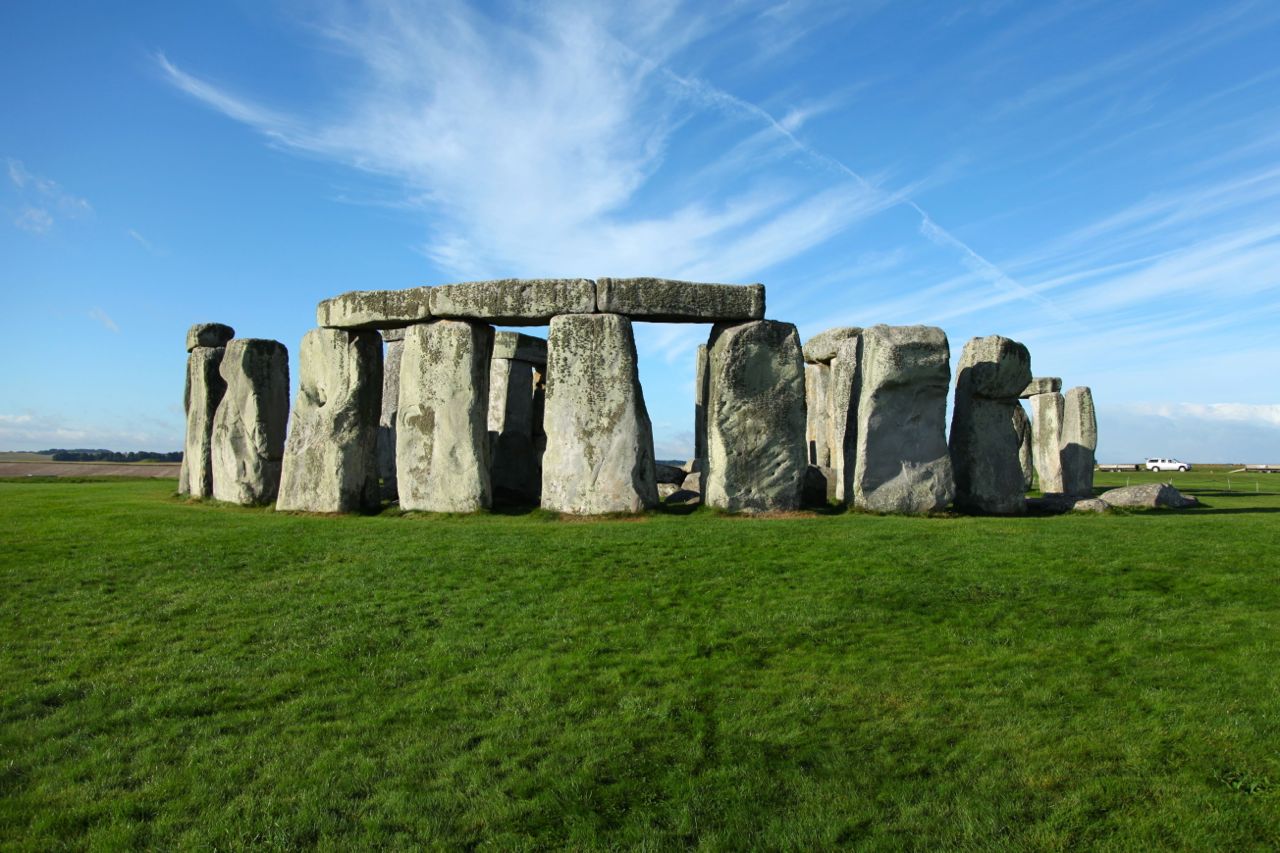
Stonehenge

Stonehenge
Stonehenge, England

Hi everybody!

Would you like to practise your English? If so, go ahead!

Wednesday, 3 April 2013

On this day: 4th April 1968

1968: Martin Luther King shot dead
 
The American black civil rights leader, Dr Martin Luther King, has been assassinated.
Dr King was shot dead in the southern US city of Memphis, Tennessee, where he was to lead a march of sanitation workers protesting against low wages and poor working conditionsHe was shot in the neck as he stood on a hotel balcony and died in hospital soon afterwards.Reverend Jesse Jackson was on the balcony with Dr King when the single shot rang out."He had just bent over. I reckon if he had been standing up he would not have been hit in the face," said Mr Jackson.Police in Memphis were put on alert for a "well-dressed" white man who is said to have dropped an automatic rifle after the shooting and escaped in a blue car.There were early signs of rioting in Memphis after Dr King's death and 4,000 members of the National Guard were drafted into the city.
A dusk-to-dawn curfew has been ordered to ward off disturbances.The US President, Lyndon Johnson, has postponed a trip to Hawaii for peace talks on Vietnam.The president said he was "shocked and saddened" by the civil rights leader's death."I ask every citizen to reject the blind violence that has taken Dr King who lived by non-violence," Mr Johnson said.
Dr King, 39, had previously survived several attempts on his life including the bombing of his home in 1956.
The charismatic civil rights leader joined the crusade for equal rights for black people in America in the mid 1950s.He first came to national prominence as one of the leaders of the Alabama bus boycott in 1955. In 1963 Dr King led a massive march on Washington DC where he delivered his now famous "I have a dream" speech. Dr King advocated the use of non-violent tactics such as sit-ins and protest marches. In 1964 he was awarded the Nobel peace prize. (BBC ON THIS DAY)

Hobbit 'ring' goes on display


An ancient gold ring thought to have inspired JRR Tolkien to write The Hobbit is on show for the first time.

In 1929 an archaeologist is believed to have told Tolkien about the ring, which he thought was linked to an ancient Roman curse.
Tolkien was very interested in the ring and the story behind it.
Not long after he began writing The Hobbit, which was first published in 1937.
The ring was originally found in 1785 in a farmer's field in Hampshire and will now be on display in a Tudor house - the Vyne - which is also in Hampshire. (CBBC Newsround)

Monday, 25 March 2013

Torrijas

The "torrijas" is a traditional sweet, typical of Easter.

Ingredients:
  • a loaf of bread (wider than the baguette)
  • 4 to 5 eggs
  • ½ litre of milk
  • 2 tablespoons ground cinnamon
  • 1/2 kilo of sugar
  • 1/2 litre of sunflower oil
  •  
    Preparation:
    • Heat some milk with about 4 tablespoons of sugar and add a teaspoon of cinnamon. Cut bread into slices half an inch thick. Dip the slices in milk and leave in a table or tray about half an hour.
    • Beat the eggs and put plenty of oil to boil in a pan (to float the toast). Pass the bread slices in egg and go frying in oil until golden brown but soft inside. Prepare a bowl with the cinnamon sugar mix (the ratio should be so that the sugar is light brown), and pass the bread in the mix as we taking them out of the pan, so that they are impregnated with sugar cinnamon. If you do not like cinnamon, are also good without it.
    • Place the toast on a tray and wait to eat them when they are warm. Can be made in advance because they are very good too cold and they release the juice of sugar.
    • The "torrijas" is a traditional dessert Easter in Spain and there are people who like to accompany them with a syrup made with honey and water that is served over the French toast when you are eating. In this case, do not pass through the cinnamon (black) sugar.
    • Tip: The is soaked in milk for the creamy interior, but we must beware of the time and temperature of the hot milk, as if they are too soft, we will have trouble breaking when fried. (Imsol)

    Tuesday, 12 March 2013

    EU bans sale of all animal-tested cosmetics

    People in Europe will no longer be able to buy cosmetics that were tested on animals. The European Union has banned all cosmetics that were developed using animal testing. The EU is also asking other countries to do the same. The total ban follows an earlier one from 2009, when companies could test on animals for serious human health issues. Tonio Borg, the EU's commissioner for health, said the ban, "gives an important signal on the value that Europe attaches to animal welfare". Mr Borg said the EU would help the industry find different ways of developing new cosmetics. He said this would, "set an example of responsible innovation in cosmetics without any compromise on consumer safety".
    Animal rights campaigners say the ban is an important victory. They have campaigned for decades against animal testing. A spokesman from the Royal Society for the Prevention of Cruelty to Animals charity said: "Animal testing in the name of beauty has never been acceptable." He added the work for animal rights activists was not over. "This is a great day for animals but…there are still many animals being used across the world to develop cosmetics," he said. Cosmetics companies were very angry over the new law. A Cosmetics Europe spokesman said European companies would fall behind in developing new products. He added that, "that consumers in Europe won't have access to new products". (Breaking News)
     

    The King's Secret


    Daily routines