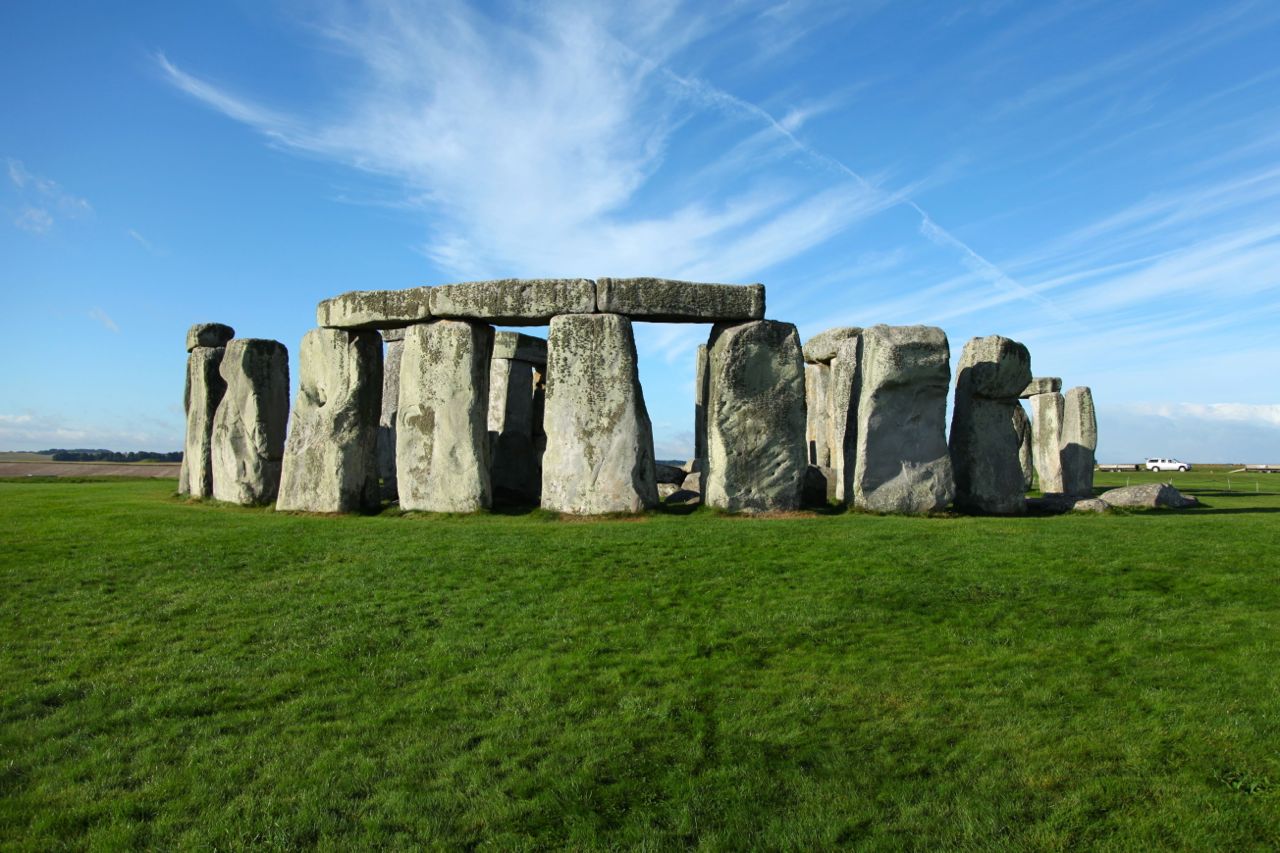
Stonehenge

Stonehenge
Stonehenge, England

Hi everybody!

Would you like to practise your English? If so, go ahead!

Showing posts with label Science. Show all posts

Thursday, 6 June 2019

Scientists puzzled by flashes on the moon


Scientists across the world are puzzled as to why there are flashes appearing on the surface of the moon. This unusual phenomenon has been happening several times a week. Sometimes the flashes of light are very short, while at other times the light lasts longer. Scientists have also observed that on occasion, there are places on the moon's surface that darken temporarily. Experts on the moon have been speculating on what is behind the flashes. One scientist said the impact of a meteorite can cause the moon's surface to glow briefly. Another scientist wondered whether the flashes occurred when electrically charged particles of solar wind reacted with moon dust.


A lunar telescope has been set up in Spain to observe what is happening on the moon. The head of the team behind the telescope is Hakan Kayal, a professor of space technology. He said: "Seismic activities were observed on the moon. When the surface moves, gases that reflect sunlight could escape from the interior of the moon. This would explain the luminous phenomena, some of which last for hours." He added: "The so-called transient lunar phenomena have been known since the 1950s, but they have not been sufficiently observed." Professor Kayal said: "Anyone who wants to build a lunar base at some point must of course be familiar with the local conditions." (Breaking News English)


Friday, 11 January 2019

Older Fathers


A study says babies of older fathers may be more likely to have health problems. Scientists studied data on over 40 million births between 2007 and 2016. Compared to babies born to fathers aged 25 to 34, babies born to fathers over the age of 45 had more health problems. They said babies could be born prematurely, be underweight or spend time in an intensive care unit. Researchers said babies born to older fathers were less healthy.


A doctor said more research was needed to prove that older fathers have less-healthy babies. The doctor said: "I think it's important to understand that the risks we are seeing are modest....the risk may not change much." The doctors said governments need to be aware of these risks. He said: "There may be public health implications of men...waiting longer to conceive." He said: "While the oldest father ever is 96...the risk...may increase if fathers conceive later.”
(Breaking News English)


Wednesday, 6 February 2013

Experts create the world's most complete bionic man

Robotics experts have created the world's most complete bionic man - made with a working heart and a face.

Rex, as the team have named him, even has lungs, kidneys and arms and legs that move.
And just like you he has blood pumping through him, though Rex's blood isn't real.
In fact, none of Rex is real, but he is made up of all the different parts that human can have as transplants.
Doctors use such parts to help patients with a limb missing or organs that don't work properly.
He was built for a television programme all about the technology that goes into making artificial body parts.
It goes on display at London's Science Museum this week. (CBBC Newsround)

Wednesday, 5 December 2012

Nyasasaurus Parringtoni thought to be oldest dinosaur

Dinosaur scientists have found what they think is the oldest known dinosaur.

It's called Nyasasaurus Parringtoni and is about 12 million years older than what we thought was the earliest dinosaur.
It walked on two legs, was up to three metres long and could have weighed 60kg - the same as many people weigh!
The find suggests millions of years passed between the first dinosaurs and them becoming dominant on land.
The scientists can't say if it's the earliest dinosaur ever because its fossil skeleton was incomplete. (CBBC Newsround)

Tuesday, 13 November 2012

Experts think early humans ate grass

Experts think early humans, who lived in Africa more than three million years ago, mainly ate grass.

Before now, it was thought our ancestors preferred hard nuts and seeds because of their big grinding teeth and powerful jaw muscles.
But after studying fossils of their teeth, scientists have found traces of tropical grasses.
They say humans could have switched from eating nuts and berries to grass when they stopped living in trees.
It means our earliest relations could have had a diet like modern-day savannah baboons, which also feed on African grassland.
Lead scientist Professor Julia Lee-Thorp, from Oxford University, said: "We found evidence suggesting that early hominins, in central Africa at least, ate a diet mainly comprised of tropical grasses and sedges." (CBBC Newsround)

Thursday, 20 September 2012

Organic Food No More Nutritious


Scientists have revealed that organic and non-organic food contain pretty much the same amounts and kinds of vitamins and other nutrients. This might be surprising news for those of us who choose to buy organic believing it to be healthier. Researchers from America's Stanford University concluded that there might not be any extra health benefits to buying organic, thus people might be better off saving their money and buying non-organic produce. Lead researcher Dr Crystal Smith-Spangle said there was no difference in the vitamin content in fruit, vegetables, meat and dairy products in organically- and conventionally-produced food. She said the only difference was slightly more phosphorus in the organic products.
Dr Smith-Spangle's review of over 200 different reports on organic food suggests people should perhaps revise their shopping choices, based on the levels of pesticides. Smith Spangler said both organic and conventional foods rarely exceeded the allowable limits for pesticides in the USA. She said the evidence wasn't too clear on whether the difference in pesticides would have an effect on health. She concluded by saying consumers should know there is overwhelming evidence that eating fruit and vegetables is good for your health, so people should eat more fresh produce, whether it is organic or conventional. Organic foods accounted for $31 billion in sales in the USA last year, up from $3.6 billion in 1997. (Breaking News English Lessons)

Thursday, 5 July 2012

Learn In Your Sleep, Researchers Say


U.S. researchers suggest sleeping can help us remember things we have just learnt. A team from Northwestern University report that a 90-minute nap can help people learn a new skill. The article on their research is published in the June edition of the journal "Nature". The scientists say: "Information acquired during waking can be reactivated during sleep, promoting memory stabilization." Test volunteers practised musical tunes before and after a short sleep. During the nap, the researchers played one of the tunes the volunteers had practised, but not the other. The team found that the participants made fewer errors when playing the melody that had been played while they slept.

Study co-author Dr Paul J. Reuber points out the research might not work with learning a foreign language while you sleep. He said: "The critical difference is that our research shows that memory is strengthened for something you've already learned." He added: "Rather than learning something new in your sleep, we're talking about enhancing an existing memory by re-activating information recently acquired." However, Dr Reuber did say there were possibilities for language learners: "If you were learning how to speak in a foreign language during the day, for example, and then tried to reactivate those memories during sleep, perhaps you might enhance your learning," he said. (Breaking News)

Saturday, 9 June 2012

Old People Smell Nicer Than Young People


"Old-person smell" is for real, according to a new study into body odour. And what's more, it's not as bad as the smell of younger people. Researchers at the Monell Chemical Senses Centre in the USA tested people's perceptions of the body odour emitted by people aged 20 to 30, 45 to 55, and 77 to 95. Volunteers in each age group wore a T-shirt containing underarm pads to bed for five nights. Samples from the pads were then tested on 41 "sniffers," who had the task of evaluating each armpit smell. The evaluators were able to distinguish between the different age groups and said the smell from the older age group was less intense and less unpleasant than the others.
 The study is part of wider research into how our brain interprets different human smells and how we react to them. Lead researcher Dr Johan Lundstrom said: "Similar to other animals, humans can extract signals from body odours that allow us to identify biological age, avoid sick individuals, pick a suitable partner, and distinguish kin from non-kin." He said of his test results: "Elderly people have a discernible underarm odour that younger people consider to be fairly neutral and not very unpleasant. This was surprising given the popular conception of old age odour as disagreeable." He said other bodily smells other than B.O. might also differ with age, especially that of our breath. (Breaking News)

Saturday, 2 June 2012

Our galaxy is heading for a big collision


Here's the bad news - our galaxy is on a collision course and is set to crash into a neighbouring one!

The good news is that it won't happen for four BILLION years!
Astronomers have used the Hubble Space Telescope to work out when our Milky Way galaxy and the Andromeda galaxy will smash into each other.
They are being pulled together by gravity, and two billion years after colliding they will exist as one single galaxy.
They are 2.5 million light years apart at the moment and travelling together at 250,000 miles-per-hour.
Scientists reckon that it's unlikely the Earth will be destroyed when it finally happens. (CBBC Newsround)

Friday, 25 May 2012

Solar plane


Solar plane completes trip from Switzerland to Morocco.

A plane powered just by the sun's rays has flown from Switzerland to Morocco.

It's the first time a plane has been able to fly across continents without using any fuel.
The flying machine's wings are covered in solar panels which turn the sun's rays into electricity to power the plane's propellers.
The plane's engineers are hoping that by 2014 they'll be able to use it to fly all the way around the world. (CBBC Newsround)

Saturday, 5 May 2012

Being Bilingual Boosts Brainpower


A study by the USA's Northwestern University provides biological evidence that people who are bilingual have a more powerful brain. Drs Viorica Marian and Nina Kraus investigated how bilingualism affects the brain. They found that studying another language "fine-tunes" people's attention span and enhances their memory. In particular they discovered that when language learners attempt to understand speech in another language, it activates and energises the brainstem – an ancient part of the brain. Professor Kraus stated: "Bilingualism serves as enrichment for the brain and has real consequences when it comes to…attention and working memory."
Professor Marian explained why studying and learning another language was so beneficial for the brain. She said: "People do crossword puzzles and other activities to keep their minds sharp, but the advantages we've discovered in dual language speakers come automatically simply from knowing and using two languages." She added: "It seems that the benefits of bilingualism are particularly powerful and broad, and include attention, inhibition and encoding of sound." She said bilinguals were better listeners because they are "natural jugglers" of sound. She said: "The bilingual juggles linguistic input and, it appears, automatically pays greater attention to relevant versus irrelevant sounds." (Breaking News English)

Monday, 23 April 2012

The Earth


Are you worried about our planet? If so, follow this link:

http://www.breathingearth.net/

Maybe you are astonished at the facts.

Tuesday, 24 January 2012

Giant solar storm battering Earth


Our planet is feeling the effects of the strongest solar storm since 2005.
High-energy particles were released after a solar flare erupted on the Sun over the weekend - and they're now hitting our atmosphere.
It's nothing to be afraid of though: the charged particles are mostly a concern for satellites - which they can disrupt.
The solar storm meant that people across the north of the UK have been able to see the Northern Lights.

What is a solar storm?

Radiation is released during the solar storm and when these particles reach Earth they collide with our planet's magnetic field at the poles - when this happens a natural light show occurs.
The solar storm can also cause communication problems for aircraft travelling near the poles and astronauts on the International Space Station.
It can also interfere with technology back on Earth, such as your parents' sat-nav and smartphones.
In 1972, a solar storm took down long-distance telephone communication across the US state of Illinois.
The effects are likely to be felt on Earth throughout Wednesday. (CBBC Newsround)