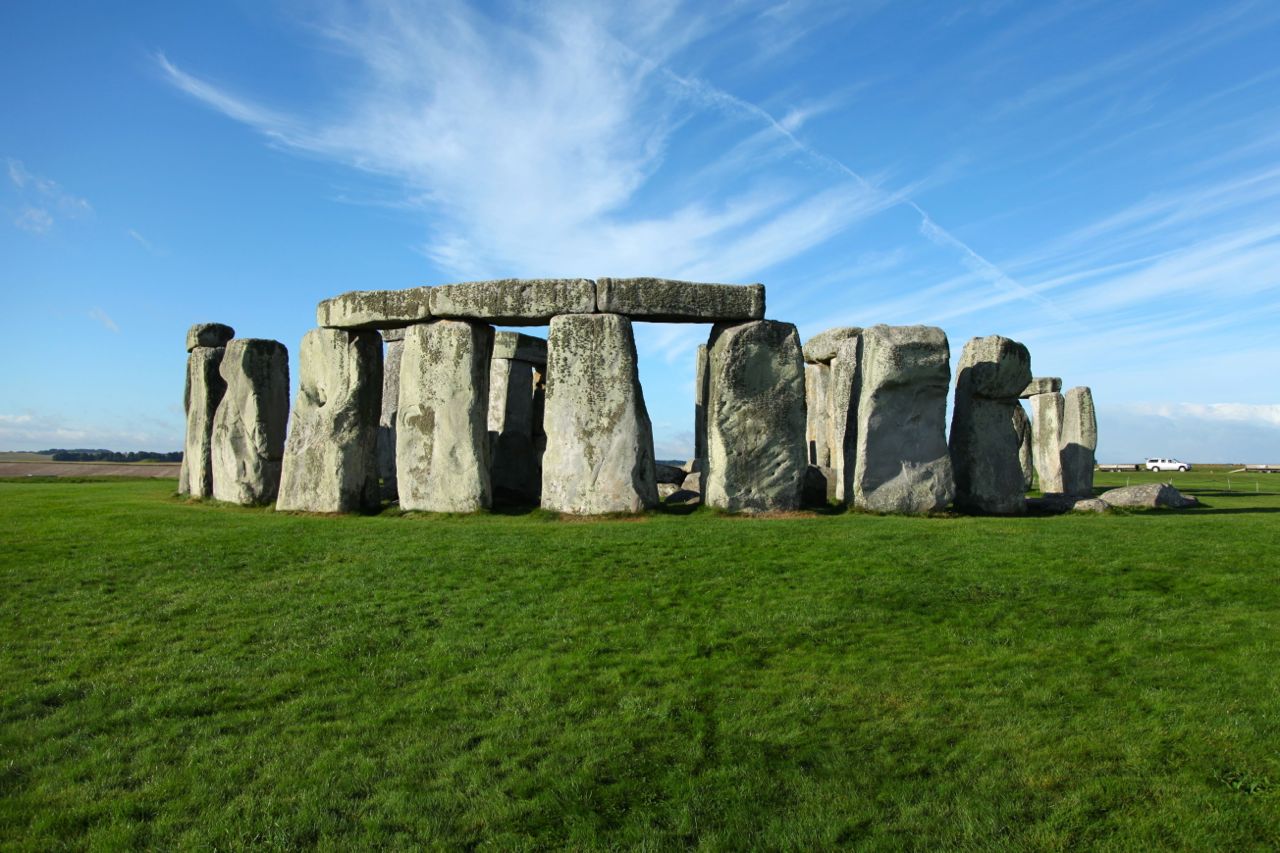
Stonehenge

Stonehenge
Stonehenge, England

Hi everybody!

Would you like to practise your English? If so, go ahead!

Showing posts with label Travel. Show all posts

Friday, 11 January 2019

Cádiz, Spain

Cadiz is located on the south coast of Spain, close to Gibraltar.

If you’re into history, this is the city for you! Founded by the Phoenicians 3,000 years ago, Cadiz is one of the oldest cities in Western Europe. The Romans also settled there, building an impressive city (some of which is still in existence today!)
Over the years it was one of Europe’s most important ports, with trading links to America. For somewhere relatively small, it really does have a fascinating past, and one you can really get under the skin of!
But for those less interested in the past, there’s plenty more to this city. There are several beautiful beaches, including La Caleta right in the centre. There are wiggly narrow streets, beautiful tree-lined plazas, fountains, great restaurants and sensational views.

It’s somewhere you could create an itinerary packed with tours and museum visits, or just spend a few days eating, drinking and exploring at your own pace. 
While some of Spain’s larger cities are becoming more multi-cultural, Cadiz has retained a truly Spanish flavour.
Locals seem to be connected, only walking a few paces before bumping into someone they know and catching up over a cerveza or a coffee!
Tapas bars go back several generations, and despite some restaurants specialising in modern Spanish cuisine, there are still plenty with menus virtually unchanged from 50 years ago.
Southern Spain benefits from pretty warm temperatures all year around. Even in mid-winter it can be as warm as 16 or 17 degrees.
The time you may find the weather uncomfortable is more likely to be in the summer months when temperatures can reach as high as 38-40 degrees. 
Cadiz is particularly famous for its Carnival in February. 
The beaches around Cádiz have won plenty of awards, including being recognised as one of Europe’s best urban beaches. La Caleta at one end of the peninsula is a popular spot with both tourists and locals, but it can get a little crowded.
If you want to spread out, head just a few minutes into the new city to Santa María Del Mar or La Victoria. (Wanderlust Chloe)


Thursday, 3 April 2014

Lisbon


          10 Reasons Why You Should Go to Lisbon


  1. CULTURE: It's one of the world's great historical cities, with characteristic and surprising sights, cultural treasures, and a beautiful setting that make it a paradise for walkers and photographers.
  2. VALUE: It's one of Europe's best values -- officially Western Europe's least expensive capital.
  3. LOCATION: It's the closest European capital to the United States and just around a 2-hour flight from all the other major European cities.
  4. CLIMATE: Its mild climate makes it an ideal year-round destination. Even in winter, when most other European cities are freezing, in Lisbon high temperatures rarely go below 10C (50F).
  5. RESORT: It is the only European capital located so close to sandy beaches, enabling visitors to combine culture with fun by the sea.
  6. SIZE: It's a compact and intimate city, ideal for a short city break or a longer romantic stay, with a lively café culture and a nightlife that is one of the most vibrant in Europe.
  7. VARIETY: Its surroundings offer an incredible variety of tourist attractions, from fairytale palaces in one of Europe's most romantic towns (Sintra), to world-class golf and fun in Europe's largest casino in Estoril, to surfing in Cascais or escaping to a natural park in Arrábida, to dolphin-watching in Setúbal.
  8. GATEWAY: It makes a perfect base to explore many of Portugal's most outstanding towns and villages, from Evora to Obidos.
  9. SAFETY: It's one of the safest European capitals. Tourists are always automatic targets in all big cities and visitors should beware of pickpocketing in Lisbon, but serious random violent crime is practically unheard of in this city.
  10. WELCOMING: It's a friendly city with a cosmopolitan population, welcoming to all visitors and families with children, and open to minorities and alternative lifestyles. (GoLisbon)
Lisbon, Portugal
                                                                          

Monday, 2 December 2013

Bergen - Norway

Bergen is "The Gateway to the Fjords of Norway" and a well-established cruise port. Bergen is an international city packed with history and tradition, a big city with small-town charm and atmosphere. Bergen likes visitors. And Bergen is worth a visit. Welcome!
Bergen is surrounded by one of the world's most spectacular tourist attractions - The Norwegian Fjords, which have now been included on UNESCO's World Heritage List.

Bergen is great to explore on foot. Strolling around old streets and alleyways where people have lived for centuries is like a fairy-tale. You will see small wooden houses, cobbled streets with stone steps in the steepest parts and flowers everywhere. Stop off at the Fish Market to mingle with the crowds. Visit the Bergen Aquarium and see the fish, penguins and seals in their natural element, as well as crocodiles, snakes and spiders.
Stroll along the listed wooden buildings at Bryggen to the old fortress at Bergenhus, or call in at one of Bergen’s many museums and galleries. And it’s not far from the city centre to Mt. Fløyen, Mt. Ulriken or another of the seven mountains that form the backdrop to the city. The panoramic views of the city, the fjord and the ocean are breathtaking.
Bergen was also the birthplace of the hugely popular composer Edvard Grieg and you can visit his home at Edvard Grieg Museum Troldhaugen. (visitBergen.com)

Monday, 18 February 2013

Carnival in Cadiz


Off the southern coast of Spain you’ll find a different sort of Carnival happening in Cadiz. While it’s definitely a match for the Carnival in Tenerife in terms of fun and over-the-top partying the Carnival in Cadiz is defined by its music. At any point in the crowded streets you’ll find musical groups stationed in plazas or in open air carts accompanied by guitars and lutes. The majority of these songs are satirical; the people in Cadiz are known to have amongst the best senses of humour in Spain, and the music of Carnival reflects this. Politicians, clergy and celebrities are all cheerfully mocked and the costumes, while still extravagant, have a focus on cleverness and wit. You can find rock music at the Plaza Catedral and a competition for satirical group songs at the Gran Teatro Falla. Between street theatre and daily fireworks displays, the Carnival at Cadiz strives to entertain and succeeds in leaps and bounds! (Spanish Fiestas)

Thursday, 27 December 2012

Den Gamle By Open-Air Museum


Den Gamle By - "The Old Town" - was founded in 1909 as the world's first open-air museum of urban history and culture.
75 historical houses from all over Denmark shape the contours of a Danish town as it might have looked in Hans Christian Andersen's days, with streets, shops, yards, homes and workshops.
At the moment two new neighbourhoods are being built - from the 1920s and 1970s. Furthermore Den Gamle By consists of several museums and exhibitions.
You can visit living rooms, chambers, kitchens, workshops and museums all year round, and you can meet the people and characters of yesteryear throughout the museum from Easter to 30th December.
Den Gamle By is like af nest of boxes: Open it, and one intriguing layer after another is revealed as you move in deeper.
Den Gamle By is under the patronage of the Danish Queen and it is one of Denmark’s few 3 star attractions in Guide Michelin and the only one outside the capital area. (Den Gamle By)

Greenland

Greenland is blessed with a peaceable people that has never waged war with anyone, and people generally show great openness to visitors.
The population of Greenland is predominantly Inuit, a people bearing an affinity and solidarity with the Inuits of Canada, Alaska and Siberia. It is only 140 years since the last immigration from Canada took place. The Greenlandic people are few in number: 55,000 in an enormous country. Approx. 20 percent of the population was born outside Greenland.  Greenland is part of the Kingdom of Denmark, but since the introduction of Home Rule in 1979 Greenland has moved towards relative independence based on parliamentary democracy. Today fishing is the all-dominating trade and accounts for 95 percent of total exports, but in the hunter districts of the outer areas, the seal and whale catch is of great importance. It actually forms the stable existence for one fifth of the Greenlandic population. For millennia the philosophy has been to live at one with nature. The hunters live with nature and follow the natural seasons. In South Greenland ruins from the norse (viking) settlers 1,000 years ago are well preserved, including the ruins of the first Christian churches on the North America continent. The symbols of the ancient culture are still alive even in the larger towns. Many people build and use their own kayak as you’ll see in every harbour. The old drum dance is performed by a growing number of artists. The musical and theatrical life is largely based on myths and sagas conveyed in a modern form.
Arts and crafts often express perceptions of ancient myths. The tupilaks - small grotesque figures carved in narwhal or walrus tooth or reindeer antler - were originally evil spirits. Today they are popular souvenirs, and many skilled artists carve the tupilaks - each and every with a unique character.  (Greenland Guide)

Tuesday, 21 August 2012

Barcelona Ranked in Top 50 of World’s Best Cities to Live


Barcelona has been ranked 40th in the 50 cities with the best quality of life in the world. Madrid made it to 43rd. Other European cities on the list include Viena and Zurich.
The report studied 221 cities around the world, taking New York (which occupies 47th place) as the reference to compare various levels of quality of life, such as public services, the offer of nightlife and accommodation, the socio-cultural atmosphre, economic, political, social, educational and environment.
Those at the bottom of the list include Monterrey (104), San Jose (105), Asunción (112), Lima (118), Ciudad de Mexico (121), Quito (124), Santo Domingo (129), Bogota (130), Guatemala (142), La Paz (147), Caracas (164), Managua (166), San Salvador (168) and La Habana (189).
According to Mercer, which undertook the study, these rankings help multinational companies and governments to establish the levels of aid that they need to facilitate workers and expatriates. (Spanish News)

Thursday, 3 May 2012

La Rioja


La Rioja is both a province and an autonomous region located in the North of Spain. It is situated between Castilla La Mancha to the south, Castilla León to the west, Aragón to the east and Navarra and the Pais Vasco to the north. The capital of La Rioja is Logroño.
It is a very fertile part of Spain and has an abundant supply of water due to the 7 major rivers that flow through it: the Oja, the Najerilla, the Iregua, the Leza, the Jubera, the Cidacos and the Alhama all of which end up in the Ebro, which also flows through this province. La Rioja is also known as the province with 7 valleys (although in reality there are more).
La Rioja is a small province but it is very rich in natural resources - it is one of Spain's most famous wine producing areas as well as having an interesting landscape. It has an important historical heritage and there are endless possibilites for visitors.
You can do all kinds of sports in La Rioja. There are ski slopes in the mountains: Valdezcaray, the Cebollera mountain range, in the Obarenses and the Cantabria and Demanda mountain ranges. Climbing, hiking, bungee jumping, paragliding and canoeing (in the Najerilla, Oja, Tirón, Iregua, Leza and Cidacos rivers) are all popular sports here. You can also go on a trip in a hot air balloon. You can go horse riding (in Navarrete), hunting or fishing or play golf.
La Rioja's main economy is wine production and its related industries (wine distribution, rural tourism...). There are also other important industries such as its textile and shoe industry as well as agriculture. Logroño the capital of La Rioja is its commercial centre.
It is well connected by air (the nearest airport is La Rioja-Agoncillo, on the N-232 road to Zaragoza, Tel: 941 277 400) by rail and also by road. The A-1 motorway which passes Burgos connects it to Madrid which is almost 388 kms away, Bilbao is 137 kms away on the AP-46 motorway (with pay tolls), Barcelona is on the AP-48 motorway (with pay tolls) 478 kms away and you reach Zaragoza which is 176 kms away on the same road. There is a good coach service too which connects La Rioja to the rest of the country. (Euroresidentes)

Tuesday, 24 January 2012

Mount Rushmore


Mount Rushmore National Memorial, South Dakota

Mount Rushmore is a sculpture of U.S. Presidents George Washington, Thomas Jefferson, Theodore Roosevelt, and Abraham Lincoln, carved into granite on the southeast side of Mount Rushmore. The 60-foot-tall (18-meter-tall) heads represent the first 150 years of the United States, symbolizing the nation's independence, democratic process, leadership in world affairs, and equality. Mount Rushmore is one of the most popular tourist attractions in the United States. The stone sculpture took six and a half years to complete and was carved with the help of hundreds of workers using dynamite, jackhammers, chisels, and drills. (National Geographic)

Tuesday, 12 July 2011

Las Islas Cíes, Galicia, Spain


Mention Spanish beaches and most people instinctively think of the Mediterranean. Yet the wilder, stunning Atlantic coastline of Galicia, just north of Portugal, has far more dramatic praias – with far fewer people on them. One of the jewels of this coast is on Las Islas Cíes, a 40-minute boat trip from the pretty town of Baiona. Once a pirates' haunt, Cíes is now an uninhabited and pristine national park, open to the public only in summer. Galegos come here to spend long, lazy summer days on the Praia das Rodas, a perfect crescent of soft, pale sand backed by small dunes sheltering a calm lagoon of crystal-clear sea.
Locals call this their "Caribbean beach", and the water is turquoise enough, the sand white enough to believe the comparison … until you dip your toe in the water. Then it feels more like kegness.  
You can sleep in an idyllic campsite, shaded by tall pine trees, with a view over the ocean. And,      this being Spain, there's even a proper restaurant serving great seafood.
Where to stay: Camping Islas Cíes is open Easter week and June-September. (guardian.co.uk)

Monday, 6 June 2011

Beijing, China: Center of the World

One of the world's oldest major capitals still serving as the national hub today, Beijing -- or Peking or Yanjing, depending on who you speak to -- is the heart and brain of China itself, and has been so for centuries. First settled about a quarter million years ago, it is home to some 20 million people over 3,000 square miles, and to so many temples and structures of great historical and cultural significance that it truly earns its nickname of the Celestial City. (Life - Your World in Pictures)