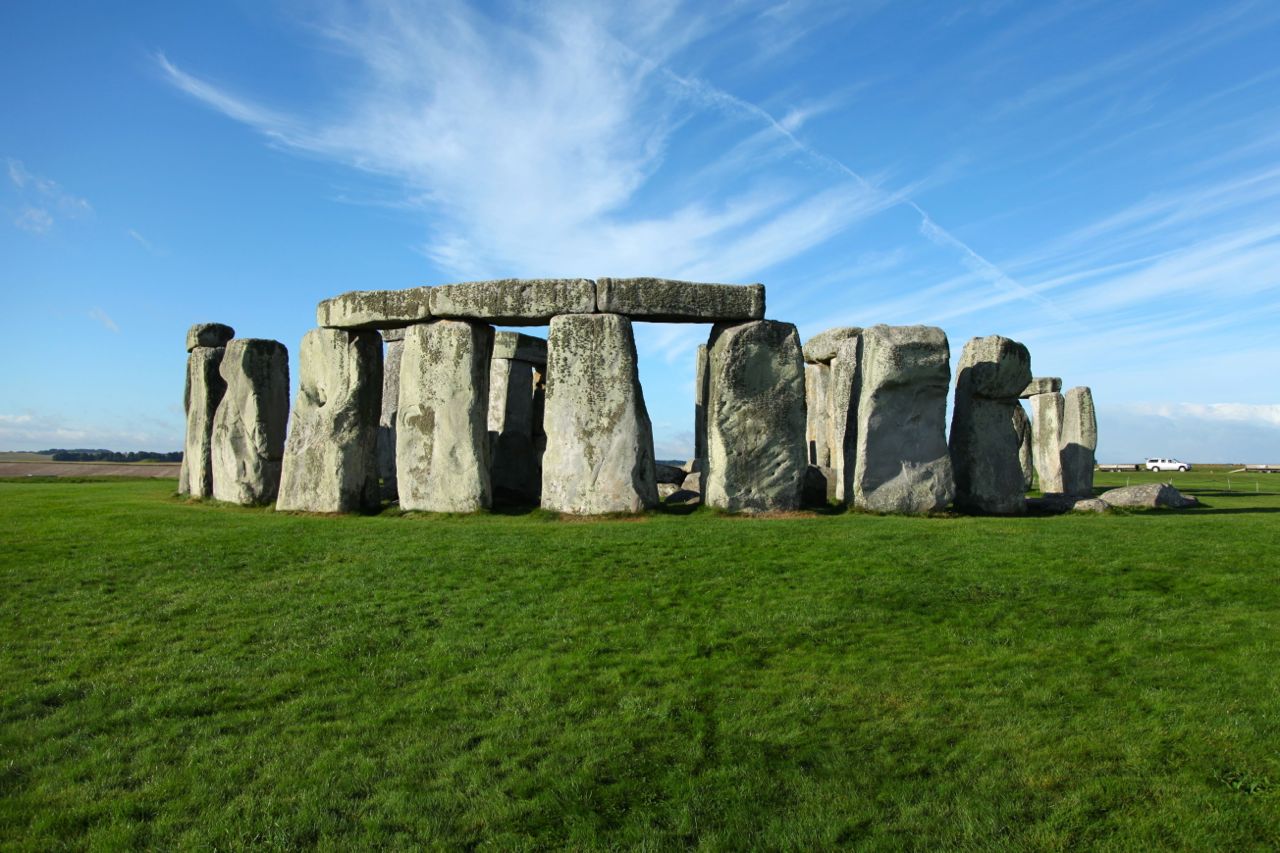
Stonehenge

Stonehenge
Stonehenge, England

Hi everybody!

Would you like to practise your English? If so, go ahead!

Showing posts with label Fauna. Show all posts

Tuesday, 11 November 2014

Galapagos tortoises out of danger


Giant Galapagos tortoises were a symbol for endangered animals. In the 1960s, there were just 15 of them. They were dying out. Wild goats were eating their food and damaging their habitat, so conservationists took action to help them. Now, the tortoises are doing well. There are over 1,000 of them living and breeding in the wild. It is a conservation success story. Conservationist James Gibb said that about half of the tortoises that were released have survived. Mr Gibbs added: "That's actually pretty amazing." He added that the tortoises could now survive without human help.
 
Giant tortoises used to live all over the world. People hunted them so they almost became extinct. There were over 250,000 in the 16th century and just a few thousand in the 1970s. Giant tortoises can weigh up to 250 kg and can live for over 100 years. One tortoise lived in captivity for more than 170 years. Wikipedia says: "Tortoises also live very uncomplicated lives, and can nap up to 16 hours a day." The conservation story in the Galapagos Islands will continue. Next year, a small island that lost all of its tortoises a few years ago will get 200 more. (Breaking News English)


Tuesday, 15 January 2013

New species of frog discovered

An Australian researcher who discovered a new species of flying frog near Ho Chi Minh City in Vietnam has revealed how she found it.

Jodi Rowley discovered the frog in 2009 but thought it was an ordinary flying frog.
But at closer inspection she noticed differences in the colour of the webbing and the size of the frog.
Jodi named the new species Helen, after her mum.
What made the discovery so special was how close to such a big city the frog was living.
Researchers are now working to establish whether Helen's frog is endangered. (CBBC Newsround)

Saturday, 12 January 2013

African country Zambia bans the hunting of big cats

 
Zambia has banned the hunting of lions and leopards because of a drop in the numbers of its big cats.

Until now, people in the southern African country could hunt the animals for sport.
But Zambia's tourism minister Sylvia Masebo said there are no longer enough cats for hunting purposes.
"Tourists come to Zambia to see the lion and if we lose the lion, we will be killing our tourism industry," she said.
Lions are found in all of Zambia's major parks, but their numbers are going down, with fewer than 4,500 lions in the whole country.
The number of leopards is unknown.
Neighbouring Botswana is also banning all sport hunting from 2014, while Kenya stopped hunting for sport decades ago. (CBBC Newsround)

Tuesday, 2 October 2012

Great Barrier Reef loses half of its coral

Australia's Great Barrier Reef is disappearing, according to new research.

The Great Barrier Reef is the world's largest coral reef system covering a mega 1,600 miles along Australia's north east coast.
But scientists have found that than half of it has been destroyed in the past 27 years.
They think that a mixture of bad storms, rising sea temperatures and coral eating starfish is to blame.
Researchers in Australia, who carried out the report, are worried that the coral cover could halve again by 2022 if things don't change.
Coral can recover from damage but it can take up to 20 years for it to get back to full health.
The team are going to try and stop the coral being eaten by crown-of-thorns starfish, who they think are responsible for destroying almost half of the reef.
Coral reefs are an important part of the marine ecosystem, they provide food and act as protection for young fish to hide in. (CBBC Newsround)

Thursday, 21 June 2012

Emperor penguins


Emperor penguins numbers are falling because of melting ice caps in the Antarctica, scientists have warned.

They say breeding pairs of the famous bird may fall by about 80 per cent by the year 2100.
Unlike other sea birds, Emperor penguins breed and raise their young on sea ice.
That means if the ice breaks up and disappears, they will have nowhere to look after their babies.
Scientists also warn disappearing ice may affect the fish, squid and krill that the penguins eat.
This will cause problems all the way up the food chain and many species of marine life may end up starving to death.
The study said that another penguin population, the Dion Islets penguin colony close to the West Antarctic Peninsula, has already disappeared completely, possibly because of a decline in Antarctic sea ice. (CBBC Newsround)

Friday, 30 March 2012

Bees

You might not have seen many of these little guys around lately.

Environmentalists have found that there has been around a massive 85 percent drop in the numbers of Queen bees in the UK.
They think that the pesticides, chemicals used on farms and gardens, cause the buzzy creatures to become disorientated so they can't find their way back to their hives.
Numbers of bees have been going down for the last decade.
Bees play a really important role in the environment, they pollinate loads of flower, fruit and other plants that we rely on.
In fact all their hard work is thought to be worth a whopping £430 million to the UK economy. (CBBC Newsround)

Friday, 15 July 2011

Scientists discover the secret to how penguins leap

We all know that penguins have happy feet - but scientists now reckon they've discovered the secret behind how penguins can fly into the air. The animals can't use their wings to flap into flight like other birds, but that doesn't stop them from being able to leap in the air to escape from danger.
Experts have found out that they're able to wrap their bodies in a cloak of air bubbles which help them to fly fast out of the water.
Penguin feathers collect tiny bubbles when they're swimming, creating a layer of air around the animal which meams that they can swim fast enough to fly out of the sea and into the air!
Scientists use the same technique when designing torpedoes and boats but didn't realise that penguins were using the same idea!
Smaller penguins like the Adelie can leap up to a huge 2-3 metres, but larger species like the Emperor can only propel themselves up to 45cm.
Scientists think that without the bubbles, the animals would have big problems getting out of the water because of their little bodies and big wings.
Experts reckon that the creatures' special talent is crucial in keeping them safe from predators. (CBBC Newsround)
A penguin leaps from the water
The bubbles help the birds leap out of the water

Saturday, 9 July 2011

Two-headed snake living in Stuttgart, Germany

Ever imagined you'd see a two-headed snake in your life time, outside the cinema at least?
No, nor did we, but here is reptile and amphibian shop owner Stefan Broghammer holding a Royal python which was born with two heads.

The snake was born a year ago, and has two spinal cords and two heads - and they're both active.

The reptile has no physical problems or defects says Broghammer, and even manages to eat and digest food easily. (CBBC Newsround)

Wednesday, 22 June 2011

Emperor penguin from Antarctic on New Zealand beach

Did you hear about the penguin from the Antarctic that turned up thousands of miles away in New Zealand?
It sounds like a joke - but that's what's just happened.
A woman walking her dog on the beach saw the young emperor penguin, which are usually found in the Antarctic.
It's the first official sighting of an Emperor penguin in New Zealand in 44 years. It's thought the bird took a wrong turn when it was at sea hunting for food - and ended up getting lost!
The visitor has attracted crowds of onlookers, who are being advised not to disturb the penguin and keep their dogs on leads.
Emperor penguin from Antarctic on New Zealand beach
Experts say the bird is about 10 months old and 80cm tall.
Emperor penguins are the tallest and largest of all penguin species, growing up to 122cm high and weighing more than 34kg! (CBBC- Newsround)